
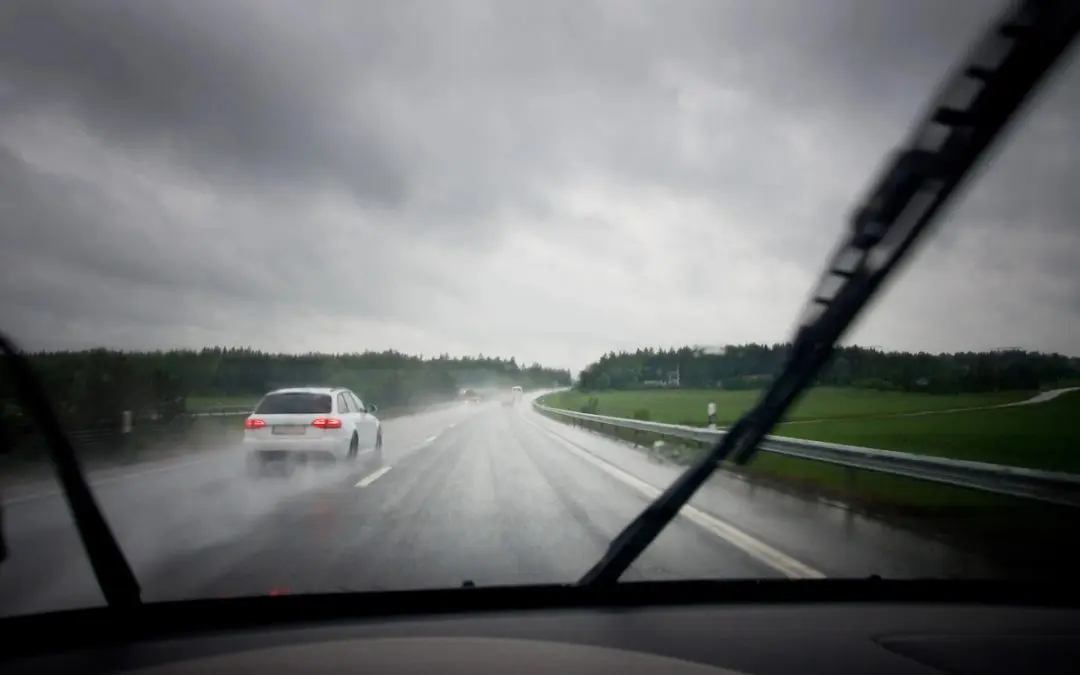
Traveling in rainy weather is an unavoidable part of the RV lifestyle, and one that’s significantly more manageable when the rig has been properly maintained and the driver has a strategy for the conditions. Rain creates challenges that fair-weather travel doesn’t: reduced visibility, longer stopping distances, slippery roads that respond differently under a heavy rig than under a passenger car, and the campsite mud and drainage issues that follow a prolonged storm. Knowing how to prepare for and respond to traveling in the rain keeps the trip moving safely and prevents the rig from becoming the source of the problem rather than the solution.
Traveling in Rainy Weather Safely on the Road
Traveling in rainy weather requires adjustments to driving habits that experienced RVers develop but new owners often underestimate. A motorhome or tow vehicle pulling a trailer has significantly more stopping distance than a passenger vehicle in wet conditions. Reducing speed by ten to fifteen miles per hour below the posted limit and increasing the following distance to at least eight seconds gives the rig the room it needs to respond without jackknifing or overrunning the vehicle ahead. Hydroplaning is a real risk for any large, heavy vehicle on standing water, and the response, easing off the accelerator without braking sharply, is the skill that prevents a loss of control from becoming an accident. Turn signals, lane changes, and merges all require more lead time in rain than in dry conditions, and traveling in the rain is not the time to push through fatigue or drive longer days than the conditions support.
Campsite Selection and Setup
Traveling in rainy weather demands more attention to campsite selection because a campsite that looks perfectly adequate on a dry day could become a muddy trap after hours of rain. When reserving or selecting a site, look for established gravel or hard-surface pads rather than grass-only sites where the rig could sink into softened ground. Positioning the rig to face the direction of exit rather than backing in gives the driver a clear pull-forward departure if conditions worsen overnight. Leveling boards under the slides and stabilizing jacks prevent the rig from settling into soft ground during an extended rainy stay, and a door mat or outdoor rug at the entry step catches the worst of the mud and wet before it enters the interior.
What Traveling in Rainy Weather Reveals About Maintenance
Traveling in rainy weather is the most reliable way to discover roof, seal, and window leaks that dry conditions conceal entirely. Water that appears around window frames, at slide seams, at roof vents, or at the base of any penetration during or after rain is an indicator that the rig’s seals need professional attention. What presents as a small drip at the interior surface is typically evidence of a seal failure that has been allowing moisture into the structure for longer than the visible drip suggests. A professional RV inspection before travel season is the most reliable way to identify these seal conditions before traveling in rainy weather turns a minor maintenance item into a significant water damage repair.
G & M Inspections provides RV Inspections and other RV services in Texas. To schedule an RV Inspection or RV services, contact us.